
Welcome to the Ranch
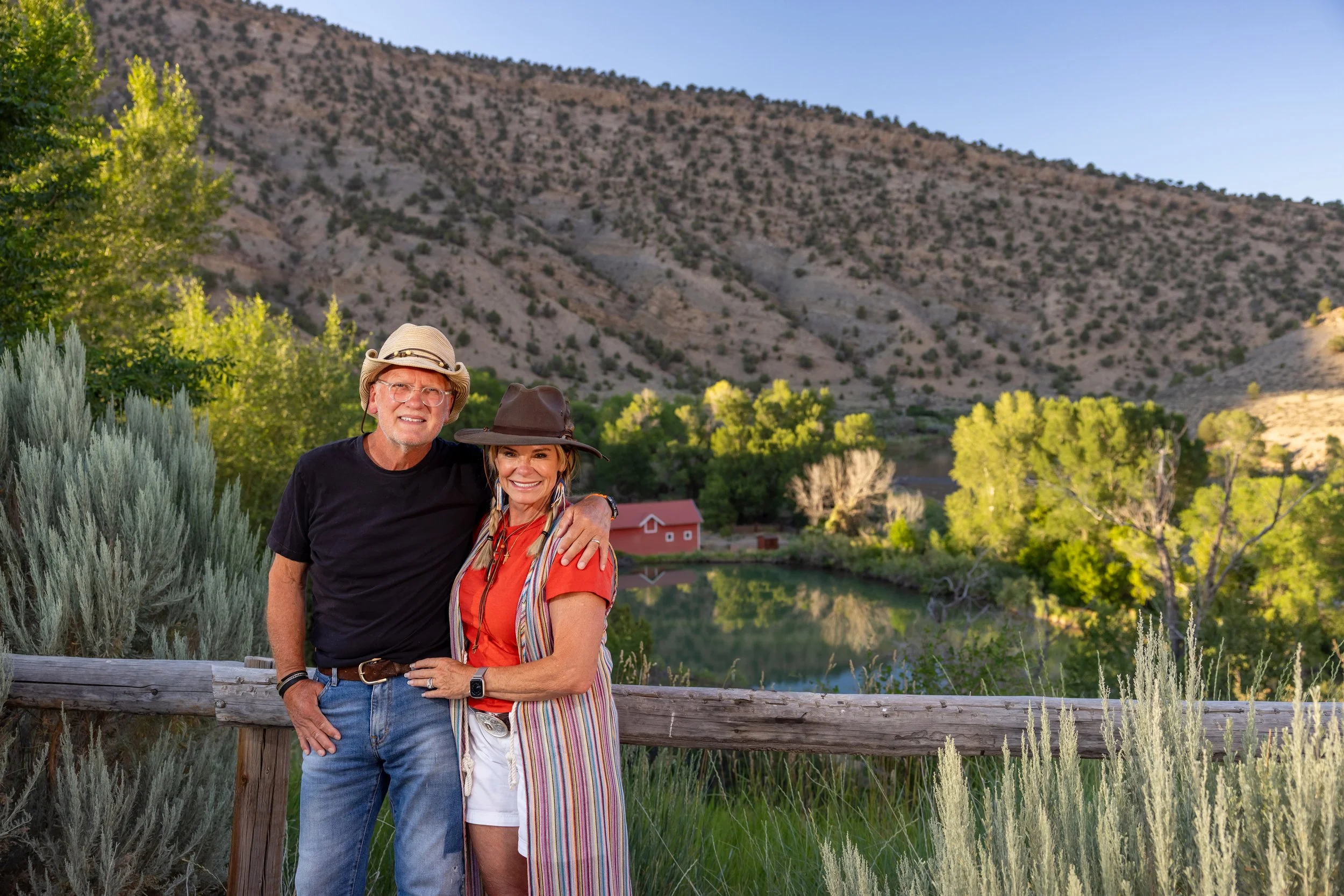
Welcome to the Ranch and thank you for making the journey. Dona and I are glad you’re here. Whether you plan to fish, hike, relax with family or simply enjoy this amazing place, we encourage you to slow down, breathe deeply and disconnect into the wide-open Western skies. But, before you begin your journey, we thought that you might like to hear a bit about the ranch and surrounding corridor. It’s a journey worth reading.
The Sweetwater community has a storied history. Long before Euro-American settlement, the Sweetwater area, including Sweetwater Lake and nearby “Indian Cave” was part of the Ute hunting grounds and a place of spiritual practice. Late 19th newspaper accounts describe the cave as a former Ute place of worship and told embellished stories about crimes and legends there, reflecting both genuine Native presence as well as sensationalized frontier reporting—one such article—the “Weeping Maiden’s Cave” story published in 1889.
Non-Native settlement in the Sweetwater valley didn’t begin until the early 1880s, driven by agriculture and livestock ranching. Trappers and hunters wandered the Flat Tops Wilderness that covers about 235,000 acres within White River and Routt National Forests. It remains one of Colorado’s largest designated wilderness areas. With elevations ranging roughly from 7,600 feet to over 12,000 on Flat Top Mountain, the wilderness holds 110 ponds and lakes-plus about 100 miles of streams, supporting trout and large wildlife, such as elk, moose, black bear and cougars.
The life of this area has been the focus of many newspaper articles featuring characters pivotal in homesteading and early development, such as Sam and Frank Doll, who opened the town’s first flour mill and general store-anchoring the local economy and set the pattern of large working ranches along Colorado River Road. In the late 1920s, the valley also was home to Jack Alterie, a Chicago hitman and enforcer who moved to the remote area to escape mob troubles. His violent and flashy presence became one of the most colorful chapters in the Sweetwater community lore. His love for diamond studded belt-buckles, expensive cars and publicity soon gave him the alias of Diamond Jack.
The main residence is a Craftsman-Bungalow style home built in 1920 by Mary Converse, of the Converse Rubber Company family, as a substantial riverfront ranch house.
After its early homestead and ranch period, the property was operated as a “dude” ranch, hosting guests who came for Western ranch life, riding and river access. During its history, the ranch was a polling station and local theater. Beginning in the 1960’s and for approximately five decades, the ranch served as one of Colorado’s premier youth summer camps. During this period, Anderson Camps built a substantial infrastructure, main lodge, bunk-style cabins, bath house, amphitheater and recreational hall.
Today, the ranch has been re-imagined—now as a high-end retreat, with year-round access for outdoorsmen, families and anglers. Nestled at the confluence of Sweetwater Creek and the Colorado River, this property has been a landmark gathering place for generations, with irrigated hay meadows, cottonwood-lined river bottom, and protected open lands on three sides.
The surrounding community is comprised of working ranches, residences and wilderness outfitters. The valley still serves a small cluster of full-time and part-time residents, many who have lived in the valley for generations. At the heart of the local community is a small schoolhouse that serves today as a gathering post for meetings and occasional celebrations.
You will find beauty at every corner—whether casting a dry fly near the red barn or hiking the canyon exploring caves along Sweetwater. But, the true beauty of this community does not rest in what you might see but how it will make you feel. And that feeling is grounded in the people who call this valley…home. Here at the ranch, we discovered the unexpected-something bigger than a neighborhood or township.
We found a family.
We hope that you will find Sweetwater Creek Ranch as a place of rest, reconnection, reflection and renewal. That your days here be filled with quiet mornings by the river, memorable time with family and friends, and a deeper connection to this remarkable stretch of Colorado’s high country.
Steven D. Davis